


How Air Valves Improve Hydraulic Performance in Water Networks


A well-planned water network depends on more than pipes carrying water from one point to another. Changes in elevation, pipeline layout and operating conditions also need to be considered when deciding where different valves are required.
Air valves form part of this planning by providing suitable points for air release and intake. Their position and function should therefore be considered alongside the overall pipeline profile.
For engineers and contractors, this makes air valve selection an important part of designing and maintaining an efficient water distribution network.
Why Air in Pipelines Needs Attention
Air can become trapped at high points and other sections of a water pipeline. These pockets occupy space within the pipe and can interfere with normal water flow.
Providing suitable points for releasing or admitting air is therefore an important consideration when planning the network.
The Role of a Double Orifice Air Valve
A double orifice air valve handles different conditions within the pipeline. It can release larger volumes of air during filling, admit air during draining and release smaller quantities that accumulate during normal operation.
This combination allows one valve to perform several functions as pipeline conditions change.
Choosing the Right Location
Air valves are often considered at high points and other locations identified through the pipeline profile. Their placement should reflect the network layout rather than follow a standard spacing approach.
Elevation changes, operating conditions and the way the pipeline will be filled or drained can all influence where a water pipeline air valve is required.
What to Consider When Selecting an Air Valve
Selecting an air valve begins with understanding what is happening in the pipeline.
Some practical points include:
· Pipeline layout: Identify locations where air is likely to collect.
· Filling and draining: Consider how air will leave or enter the pipeline during these operations.
· Operating conditions: Review the pressure and flow conditions of the network.
· Connection: Check that the valve connection suits the pipeline arrangement.
· Valve function: Determine whether the application requires air release, air intake or both.
Looking at these points helps teams choose an air valve according to the actual application rather than focusing only on valve size.
DN80 Air Valve for Water Applications
The DN80 air valve referenced for this application is a double-orifice design intended for water pipeline use.
For a project team, the important point is how the valve fits within the wider network. Its size, pressure rating, connection and operating function should be checked against the pipeline design and project specification.
This is particularly relevant where an air release valve for water pipelines needs to handle different conditions during filling, normal operation and draining.

Air Management as Part of Pipeline Planning
Air valves work alongside other components within a water distribution network. Their role is specifically connected to managing air rather than controlling the main flow of water.
Considering air management during pipeline planning allows engineers to identify suitable valve locations before installation. This can be especially useful on networks with changes in elevation or sections where air accumulation is expected.
It also helps ensure that air valve selection is based on the layout and operation of the pipeline rather than being treated as a standard fitting for every location.
Keeping Selection Practical
There is no need to make air valve selection more complicated than necessary. The starting point should be the pipeline itself.
Teams should understand where air could collect, what happens when the line is filled or drained, and what type of air movement needs to be handled. From there, the appropriate valve type, size, connection and pressure rating can be reviewed.
This provides a practical way to approach selection while keeping the focus on the conditions the valve will actually experience.
Discuss Air Valve Requirements at WETEX 2026
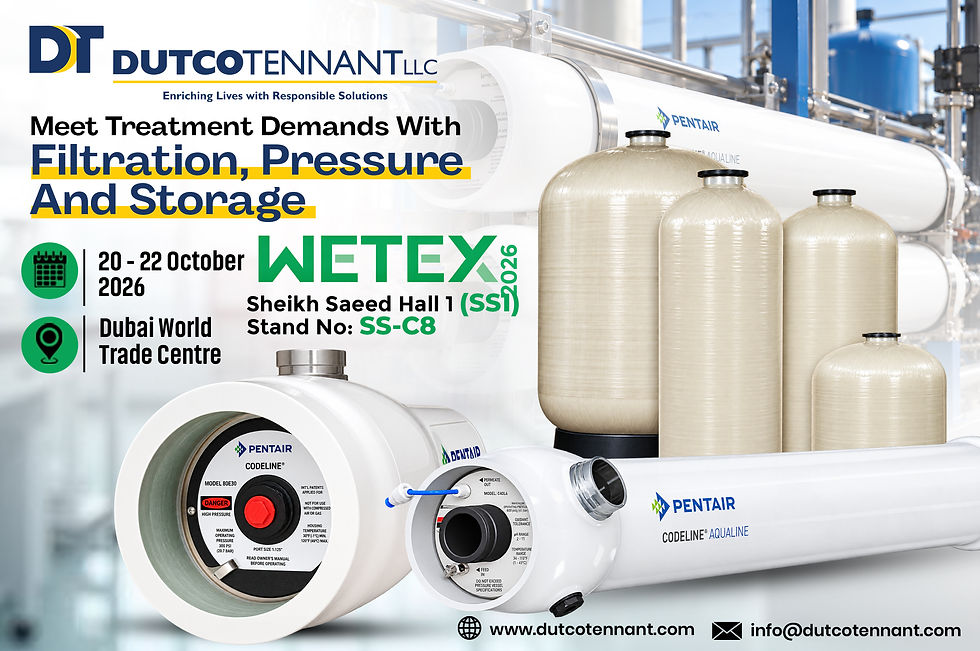
For engineers and contractors working on water networks, WETEX exhibition 2026 provides an opportunity to discuss air valve selection in relation to specific pipeline layouts and operating conditions.
Visitors can meet Dutco Tennant LLC from 20–22 October 2026 at Dubai World Trade Centre, UAE, Sheikh Saeed Hall 1 (SS1), Stand SS-C8.


Comments